Rhythm Section Programming Class | Portland
Rhythm Section Programming
Think like a drummer or a strummer: program beats, riffs and fills that sound like… well… beats, riffs and fills. A programmed rhythm section usually sounds programmed: hi-hats at the same velocity from top to bottom, a bassline that never answers the kick, a guitar part no guitarist would play. This course is about the difference - how drummers, bassists and guitarists actually approach their parts, and how to get that into a sequencer.
Drumming Insights
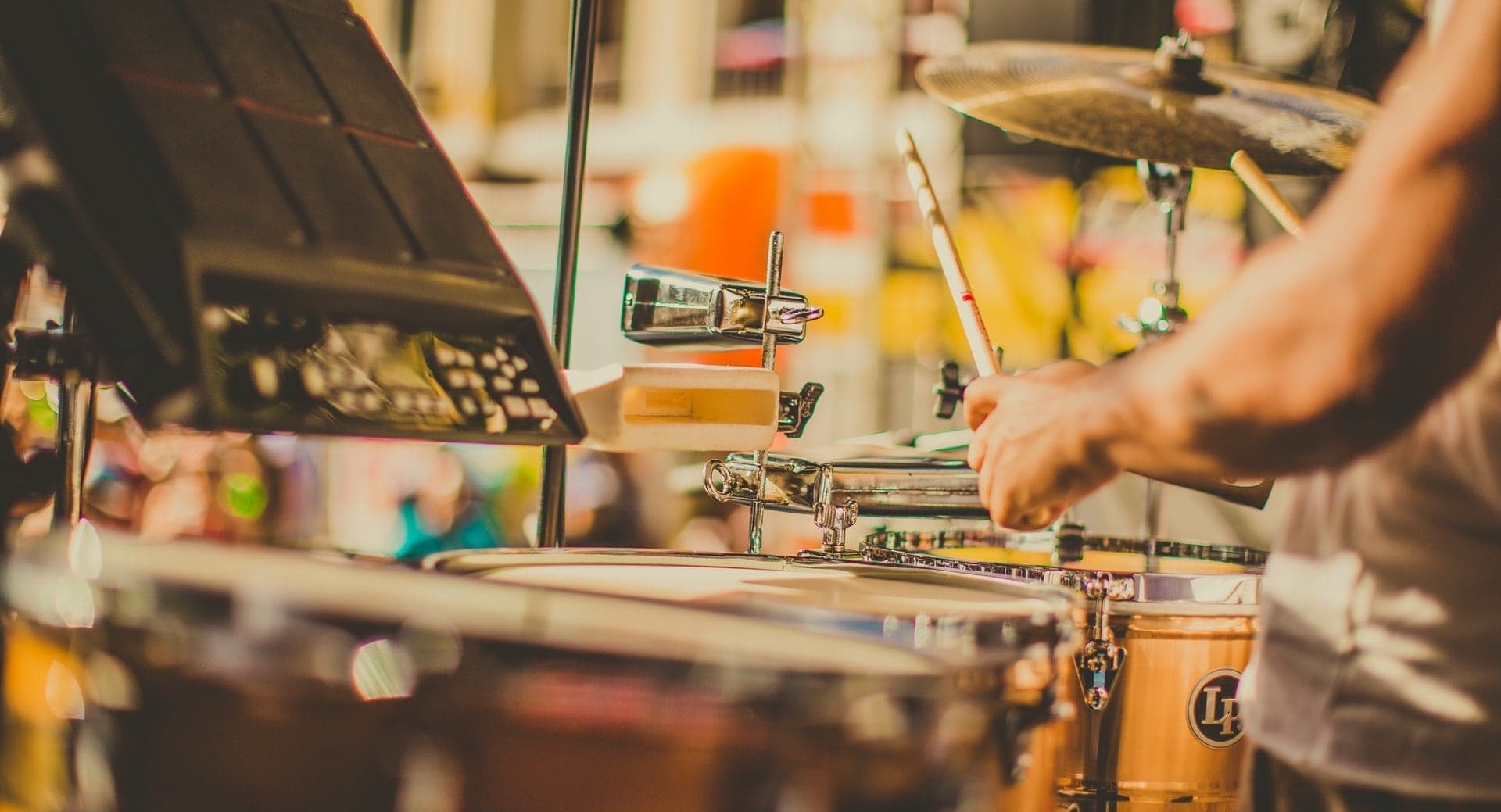
- →Step into the mindset of a drummer. Explore the art of crafting realistic drum patterns and fills that groove with authenticity, adding a rhythmic heartbeat to your music.
Guitar and Bass
- →Elevate your stringed instrument programming to new heights. Learn techniques to infuse your guitar and bass parts with musicality, creating layers that complement and enrich the overall sound.
Session Musician Secrets
- →Peek behind the curtain of top session musicians. Understand how they approach their instruments, picking up invaluable tips to infuse your production with the finesse and expression that sets the pros apart.
Rhythm Section Mastery
- →Uncover the secrets of the rhythm section—the backbone of your beat. Master the essential building blocks that bind your music together, creating a solid foundation that propels your compositions forward.
Over 18 hours you take each in turn: drum patterns and fills that groove, stringed parts with phrasing and musicality, and the habits session musicians bring to a take. You leave with a rhythm section that holds a track together rather than sitting under it.
In Portland this course is deliberately small: a handful of students, one working producer, and plenty of time on the equipment. If getting to the studio is not practical, the same classes run live online, using our specialist music collaboration software, Muse. Discover qualities that distinguish us, here.
What our students say.
“I came into the program with no idea how to work Logic, and after the intensive week, I worked out programming beats, using loops and samples…I feel like I can take my music to the next level now. Thanks :)”
Christy Thompson
Instructors


Questions we hear a lot.
Building authentic drum patterns and fills, writing musical guitar and bass parts, picking up session musician technique, and locking in the rhythm section as your track's foundation.
Producers who are already programming beats and basslines but want them to feel less mechanical and more like a real band recorded them.
Yes - 11 hours of 1-on-1 instruction is available through the Rhythm Section Programming Private Instruction page.
No - none of that is required to follow the course.
Hit the "Connect" button and a placement expert will get back to you within a business day.
$799 + $100 Registration if booked 14 days before start or $999 + $200 Registration
Ready to get started?
InquireHow to Compress Drums
The sound of modern drums in rock, pop, and electronic music very rarely embodies the natural range that acoustic drums are capable of. This is most often due to the application of compression, adding punchiness, energy and consistency to a drum track.
Read →Drum Miking Techniques
Drum Miking Techniques: Recorder Man and Glyn Johns Katie Gilchrest's take on drum miking techniques Many considered the drum set one of the hardest pieces of equipment to mic in a studio. A drum kit is not one instrument, but a collection of multiple instruments, featuring a wide variety of differe
Read →How To Improve Bass In Music
How To Improve Bass In Music Bass can be a very complicated part of your mix. Actually, we’d even go and say that the majority of home-producers or home-recorded work, don’t have a good low-end, which is really the basis (get it, bass-is?) for any mix. In this article, we look at how to improve bass
Read →Sound Design with Macro Variations in Live 11
By Heinrich Zwahlen The ability to store the state of Macro Controls as preset variations in Racks has drastically increased the functionality of these already...
Read →What does a music producer do?
by Chris Porter It would be easy to write an entire article arguing about exactly what this question means, but the simplest answer (and the truth of the matter) lies behind the scenes - of whatever parameters the interested parties have agreed to. Allow me to explain… In today’s world of music crea
Read →How to Record Vocals When Producing A Singer - Vocal Production
How to Record Vocals When Producing A Singer - Vocal Production By Chris Porter Firstly, let’s explode the myth that vocals are anything other than another instrument, or colour (depending on how you like to view things!) that you use to build up a musical picture. Yes, they convey language as well
Read →