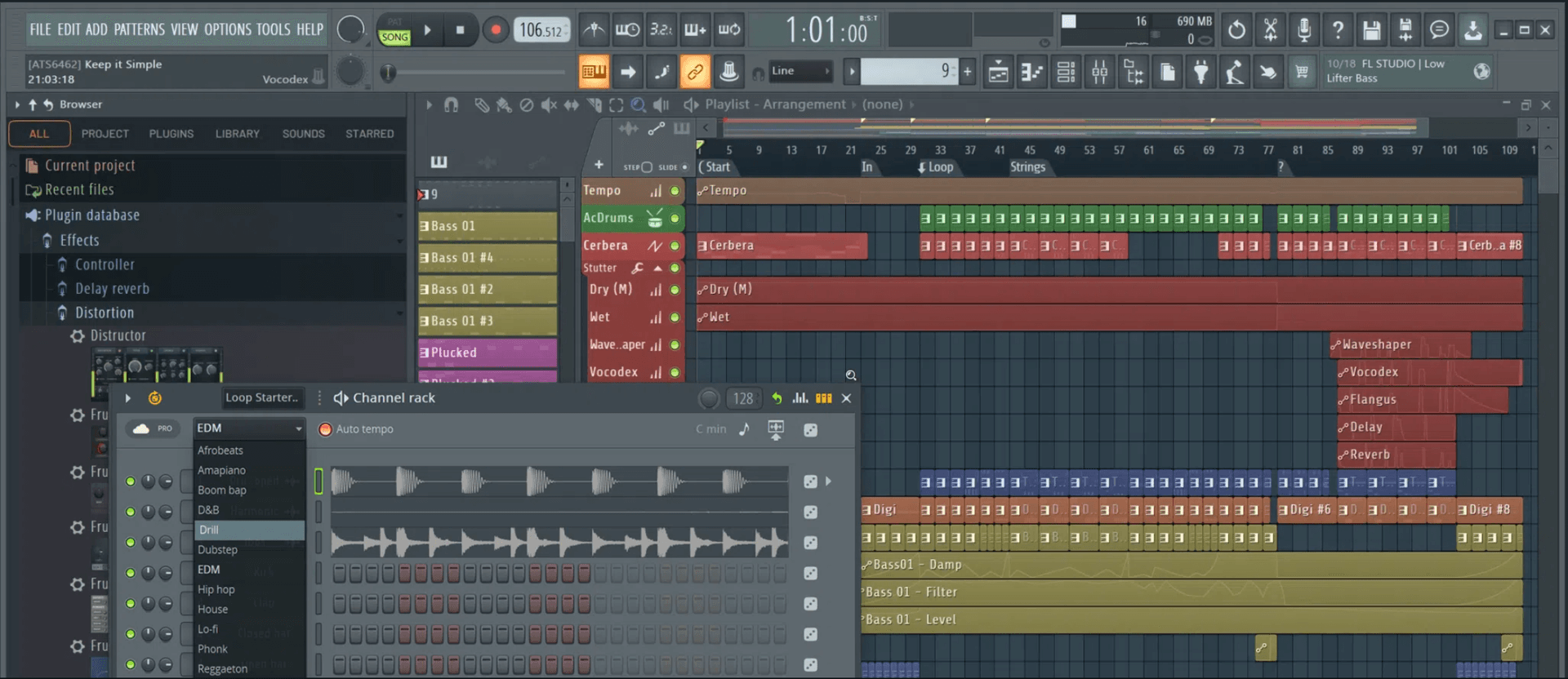
FL Class | Portland
FL Studio Course
Build Beats. Shape Sound. Finish Tracks.
FL Studio has become a go-to DAW for electronic music producers and beat-makers around the world—but whatever your genre, if FL is your weapon of choice, and you want your name on this list of notable users, this course will give you the tools and confidence to have the best chance.
Main Menu Bar
- →File Menu
- →Edit Menu
- →Add Menu
- →Patterns Menu
- →View Menu
- →Options Menu
- →Tools Menu
- →Help Menu
Toolbar
- →Editing the Toolbar
- →Main Menu
- →Title & Hint Panel
- →Transport Panel
- →CPU & Memory Panel
- →Global Snap Panel
- →Output Panel
- →Online Panel
- →Pattern Panel
- →Shortcut Icons
- →Time Panel
- →Multilink Controllers Icon
- →Main Volume & Pitch Panel
- →Window Controls
File Browser
- →Plugin Database
- →Project Browser
- →Advanced folder stuff
Channel Rack & Step Sequencer
- →Channel Button Menu
Channel Settings
- →Main Control
- →Sampler Setting
- →Instrument Setting
- →Miscellaneous Setting
- →Automation Clip Setting
- →Layer Setting
- →Plugin Window Setting
Piano Roll
- →Piano Roll Arpeggiator
- →Piano Roll Articulator
- →Piano Roll Chopper
- →Piano Roll Claw Machine
- →Piano Roll Flam Tool
- →Piano Roll Flip Tool
- →Piano Roll LFO Tool
- →Piano Roll Key Limiter Tool
- →Piano Roll Menu
- →Import MIDI Data Dialog
- →Piano Roll Quantizer
- →Piano Roll Randomizer
- →Riff Machine
- →Piano Roll Scale Level Tool
- →Piano Roll Strum Tool
Playlist
- →Patterns
- →Audio Clips
- →Automation Clips
- →Performance Mode
Instrument / Generator Plugins
- →We explore all the instruments FL studio has to offer, which are too many to list here!
Mixer & Mixing
- →We dive deep into the vast mixing tools that come with FL Studio, which are too many to list here!
Recording: Audio, Notes & Automation
- →Audio Recording
- →Audio Interfaces (USB Microphones)
- →Note Recording
- →Note Step Entry
- →Automation Recording
- →Linking USB/MIDI Controllers
- →MIDI Scripting
- →Preconfigured Controllers (USB/MIDI)
- →Linking Internal Controller Plugins
- →Mapping Formula
- →Automation Clips
- →Automation Event Editor
- →LFO Tool
- →Scale Levels Tool
- →Import MIDI Data Tool
Edison Wave Editor & Recorder
- →Edison: Sample Properties
- →Edison: Amp Tool
- →Edison: Blur Tool
- →Edison: Convolution / Reverb Tool
- →Edison: Claw Machine Tool
- →Edison: Drum Tool
- →Edison: Equalize Tool
- →Edison: Noise Removal Tool
- →Edison: Script Tool
- →Edison: Time Stretch / Pitch Shift Tool
- →Edison: Tune Loop Tool
ReWire Support
- →Client Mode
- →Host Mode
Installing & Using VST / AU Plugins
- →FL Studio as a Plugin (VST / AU)
Whether you're a complete beginner or already making tracks in FL, this 36-hour course delivers deep, structured training in music production, beat-making, and engineering. We cover every major element in detail, packed with real-world tips and techniques that even experienced users find game-changing. You’ll leave with a solid workflow, polished production skills, and a competitive edge over anyone stuck in YouTube rabbit holes.
Classes are live and interactive—in-person or live online—so you can ask questions and get feedback in the momentwhen you're inspired... or confused. It’s this kind of immediate, practical support that makes in-person learning so effective.
In Portland this course is deliberately small: a handful of students, one working producer, and plenty of time on the equipment. If getting to the studio is not practical, the same classes run live online, using our specialist music collaboration software, Muse. Discover qualities that distinguish us, here.
What our students say.
“The instructor was great. He was extremely good at explaining things and always gave us enough time to put what we were learning into practice. Most importantly, he is passionate about music and actually enjoys teaching which really makes the whole experience very enjoyable.”
Reggie Chelsom
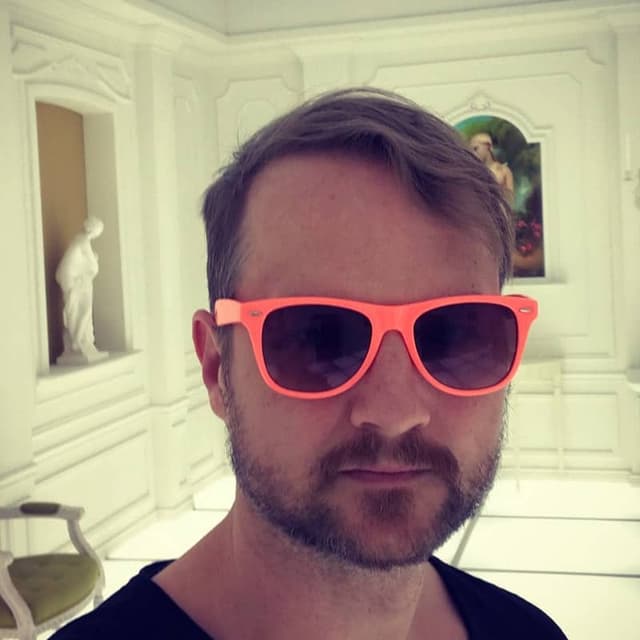
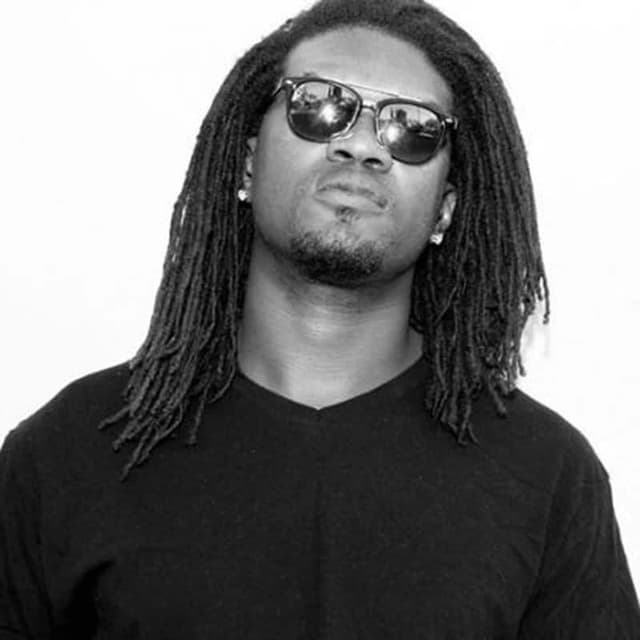
Instructors


Questions we hear a lot.
Installing and using VST/AU plugins, and even running FL Studio itself as a plugin inside another DAW.
Full track production - from beat-making and arrangement through mixing and finishing a track.
36 hours, or 20 hours as 1-on-1 instruction.
Fully interactive - live classes, in-person or online, with room to ask questions in the moment.
Yes - see FL Studio Private Instruction.
$1499 + $100 Registration if booked 14 days before start or $1799 + $200 Registration
Ready to get started?
InquireProject: Build a Rhythm Section from Scratch
The Rhythm Section Pro project - drums, bass, guitar and percussion for one track, programmed to sound played, and a session-ready brief for a real player.
Read →Skills Every Musician Should Know
Whether you’re a budding producer, DJ or a brand new indie artist -- most of the time the focus is purely on the music, and that’s about it. However, soon enough, you’ll realize that there’s much more involved in just putting on music.
Read →Logic Pro training: Zoom tool and using loops with regions
Logic Pro training: Zoom tool and using loops with regions: I made a video at my studio about zooming for Logic Pro Training. I don't know how I managed to talk about zooming for over 6 1/2 minutes but I love it. The first 4 minutes can get a bit tedious if you're familiar with all the weird and won
Read →Which DAW is best? – Logic, Pro Tools, Ableton or Cubase?
- Al Riley My first multitrack workstation was my 4-track Portastudio (not a DAW, an AAW I suppose?), which gave me the novel luxury of changing the volume and panning different instruments after recording them! I could even use insert effects (a guitar pedal) and punch-in recording to fix questiona
Read →Camel Audio’s Alchemy, NI’s Absynth and Propellerhead’s Malstrom
Additive Synthesis: breaks sound down into its harmonics, creating timbre by adding sine waves together Granular Synthesis: creating sounds by playing waveforms and/or samples through a synthesis engine that operates like a sampler on the microsound time scale So, what can you achieve by running som
Read →Which DAW is better – Logic, Pro Tools, FL, Ableton or Cubase?
When I very first started in the early-nineties, we all used Atari STs with a whole 512k of Ram for sequencing MIDI and not much else. All the audio was dealt with using 24 track 2" tape, with up to 3 slaved together synchronised using lynx synchronisers. Back then for sampling, we had the classic A
Read →